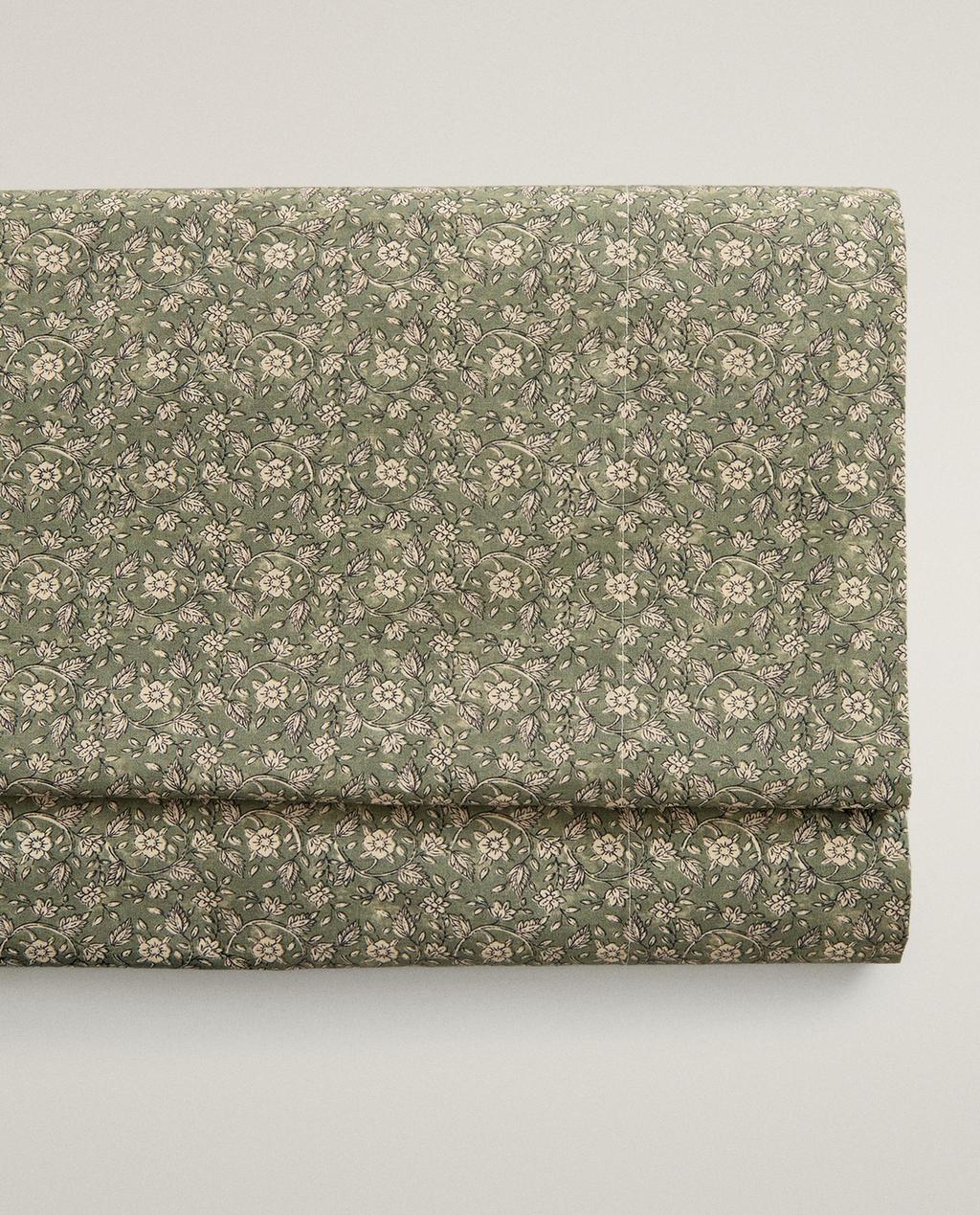
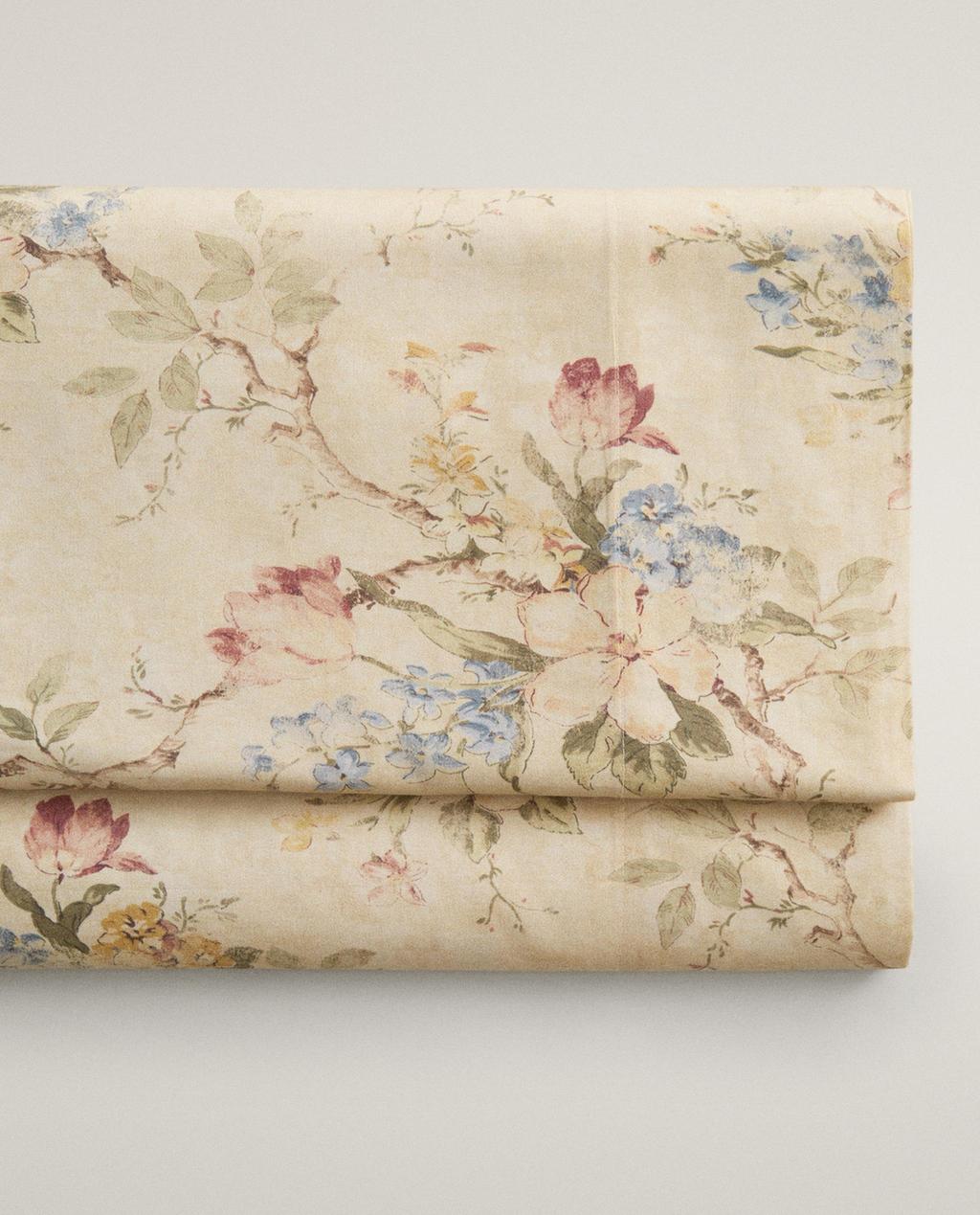
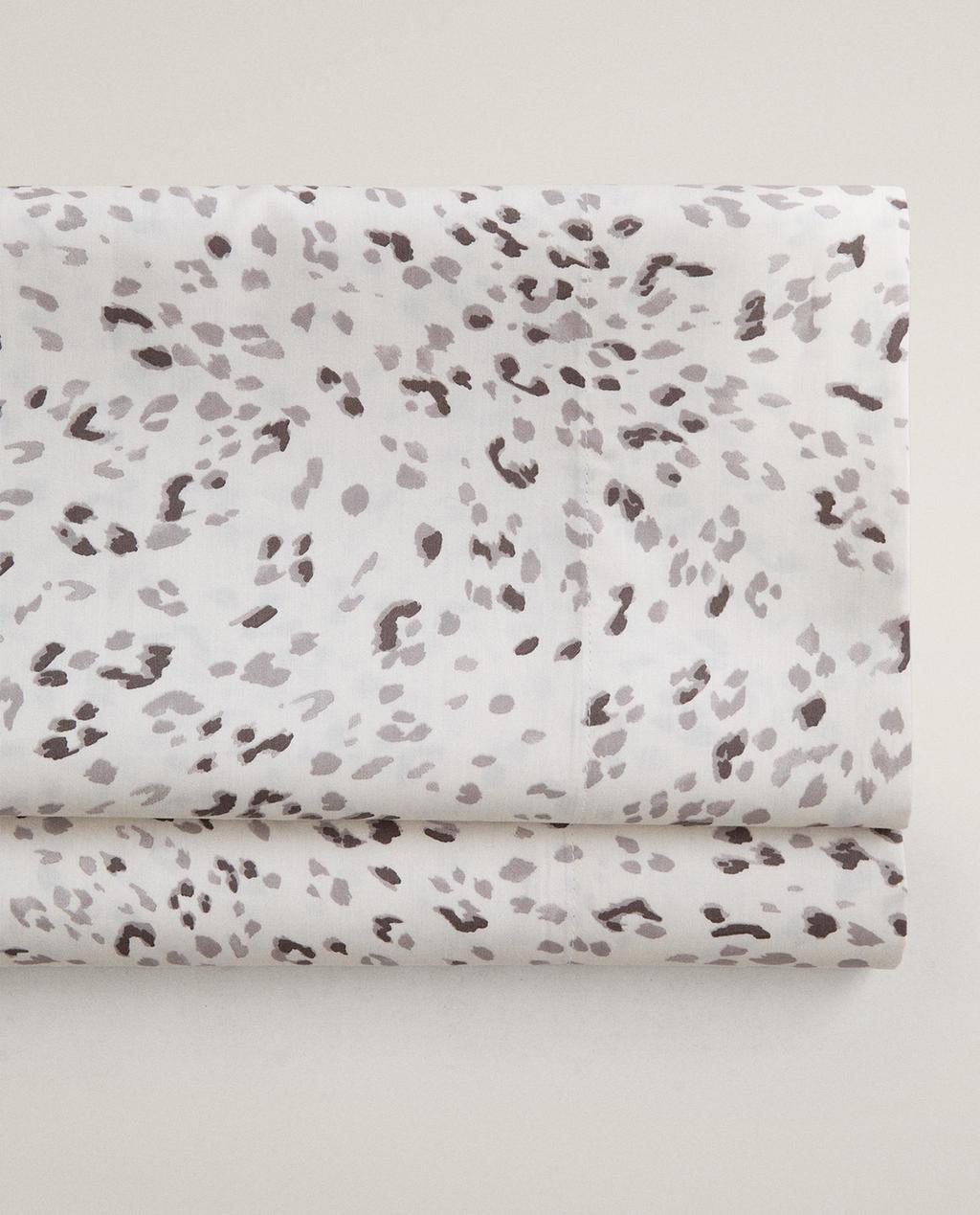
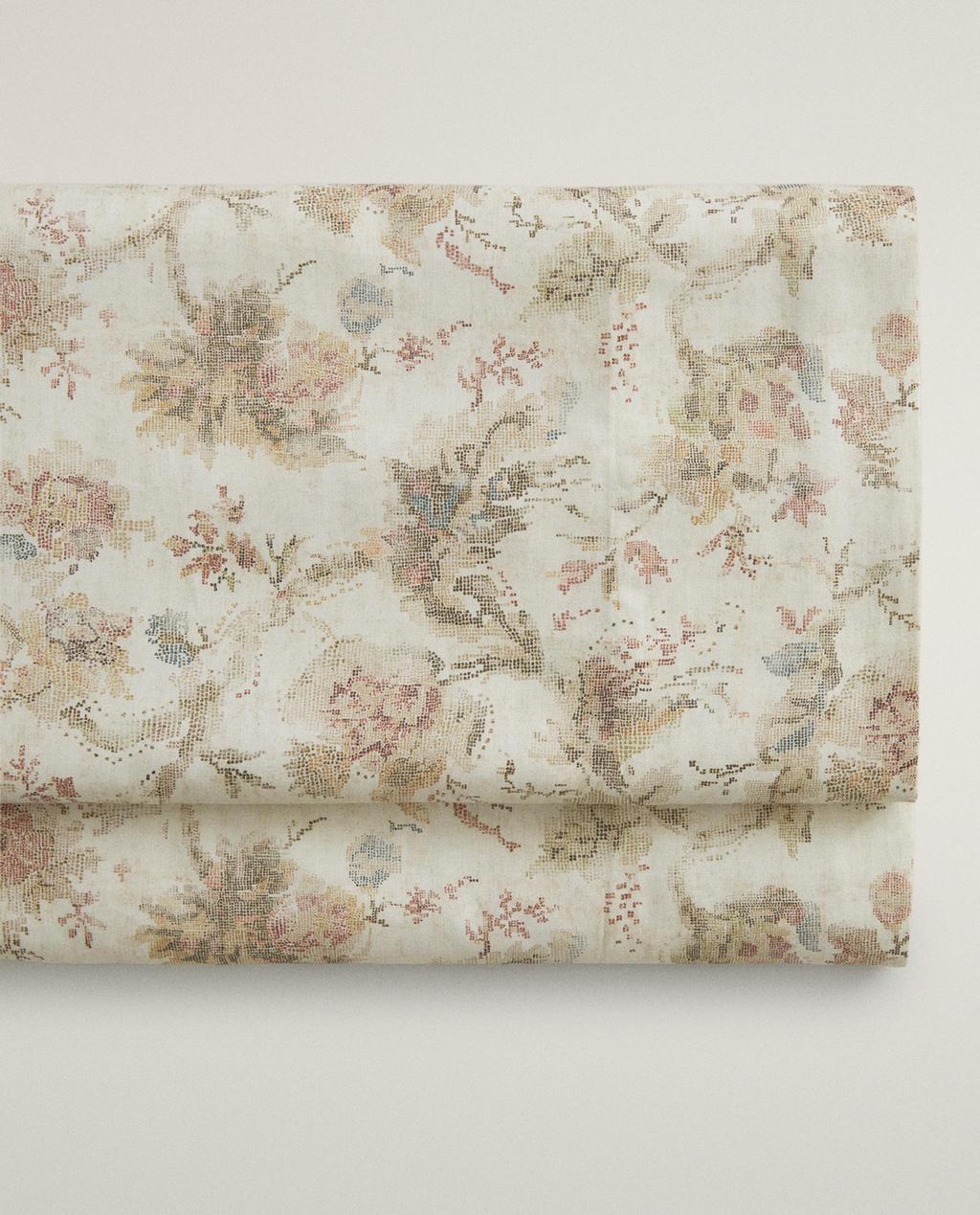
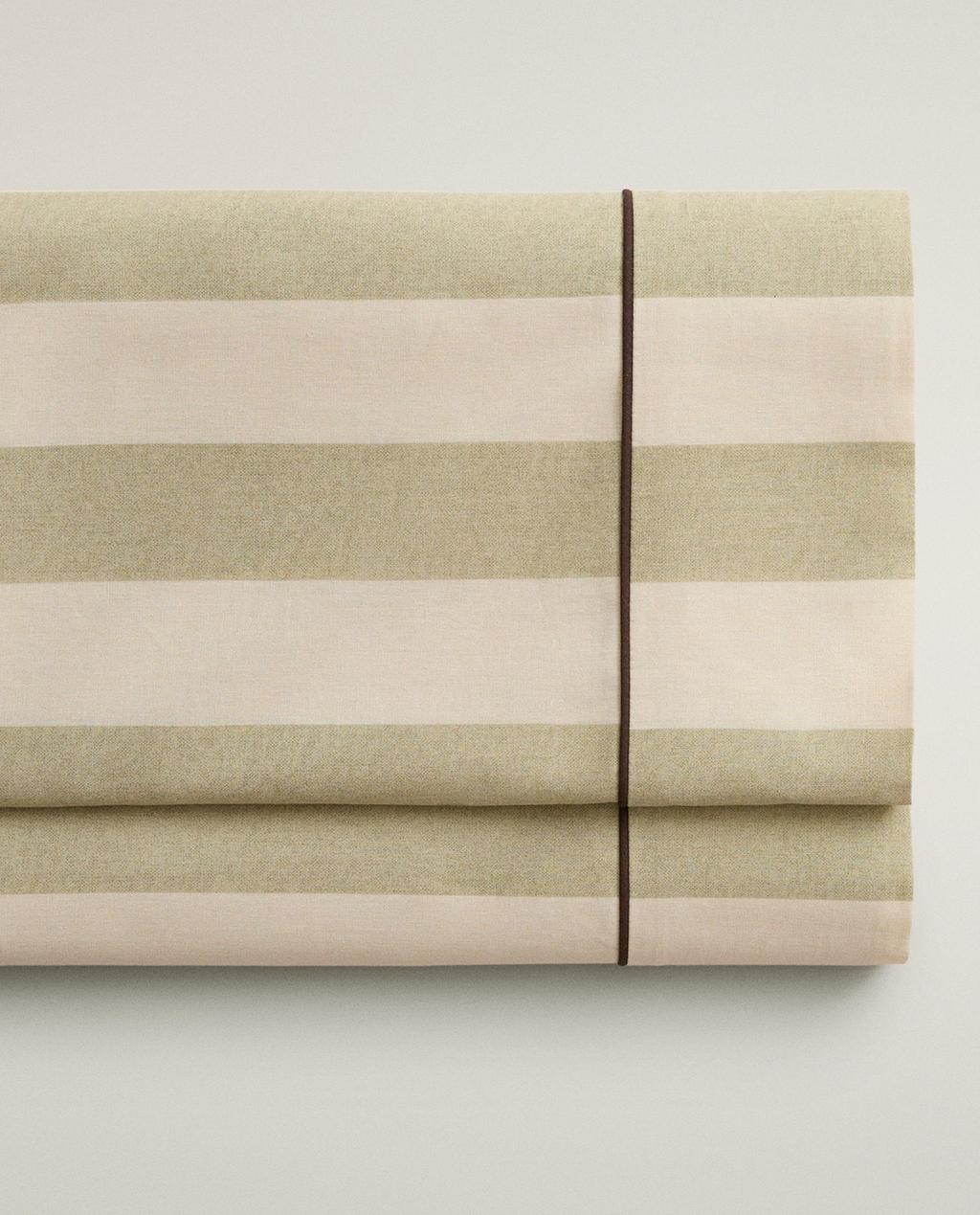
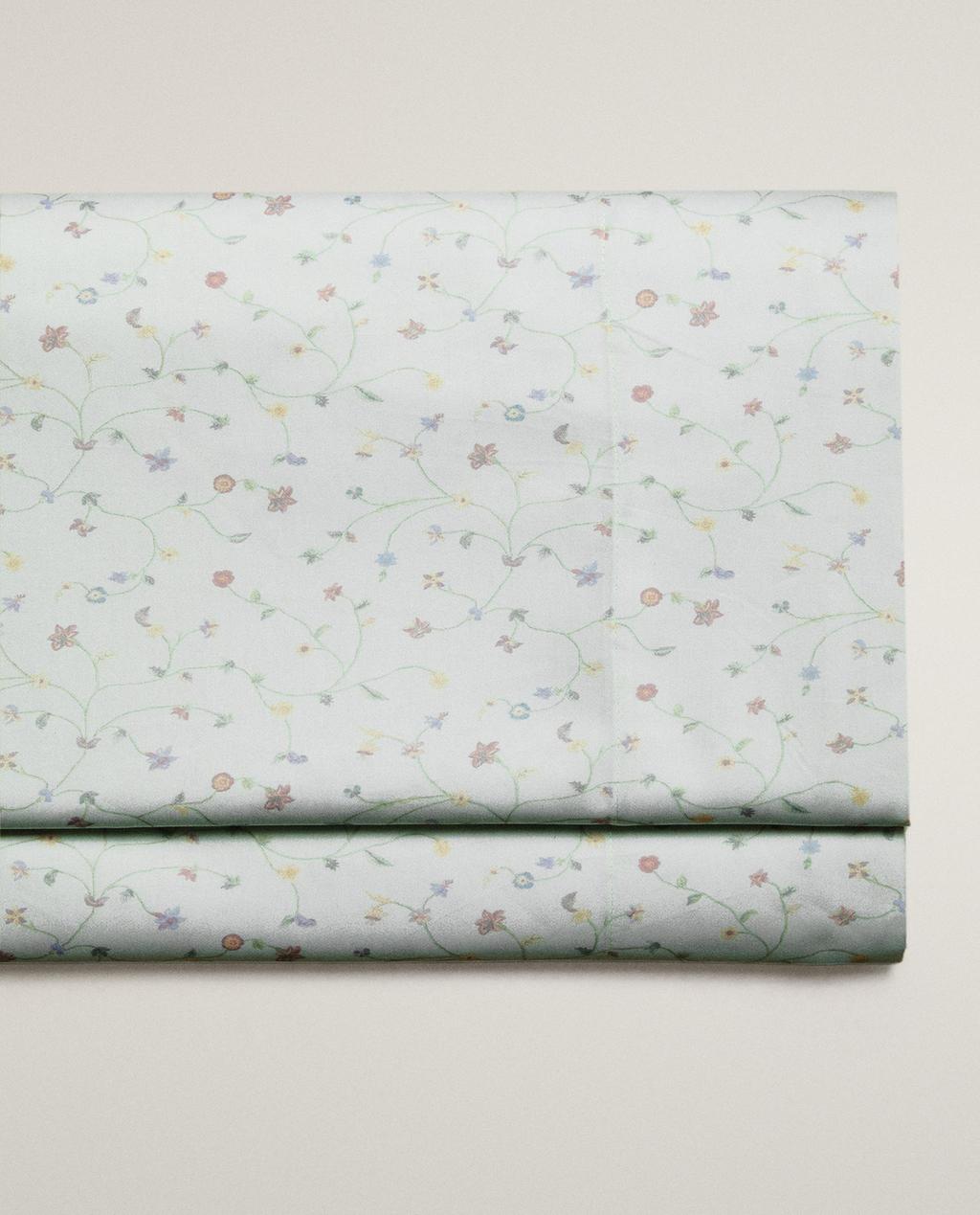
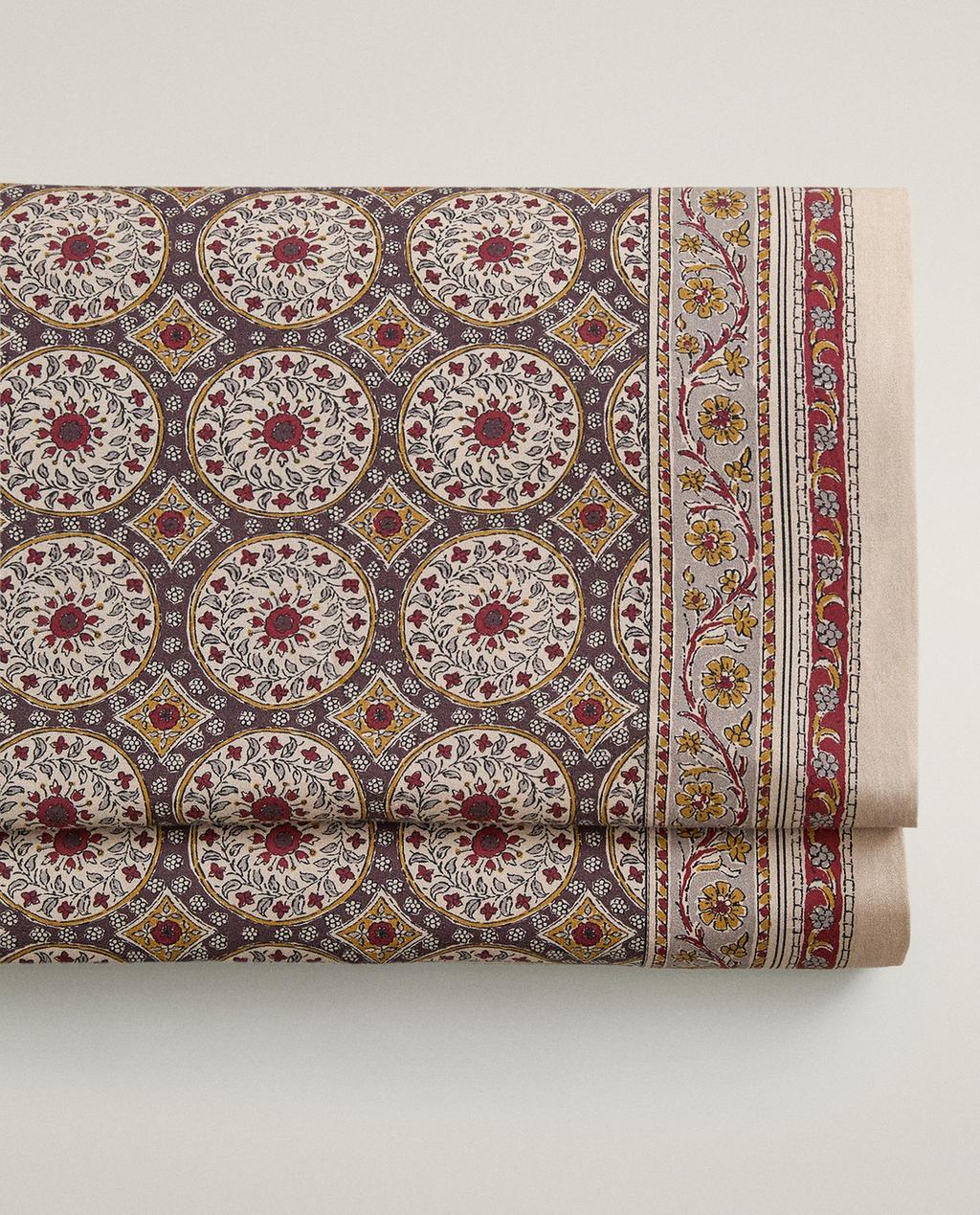
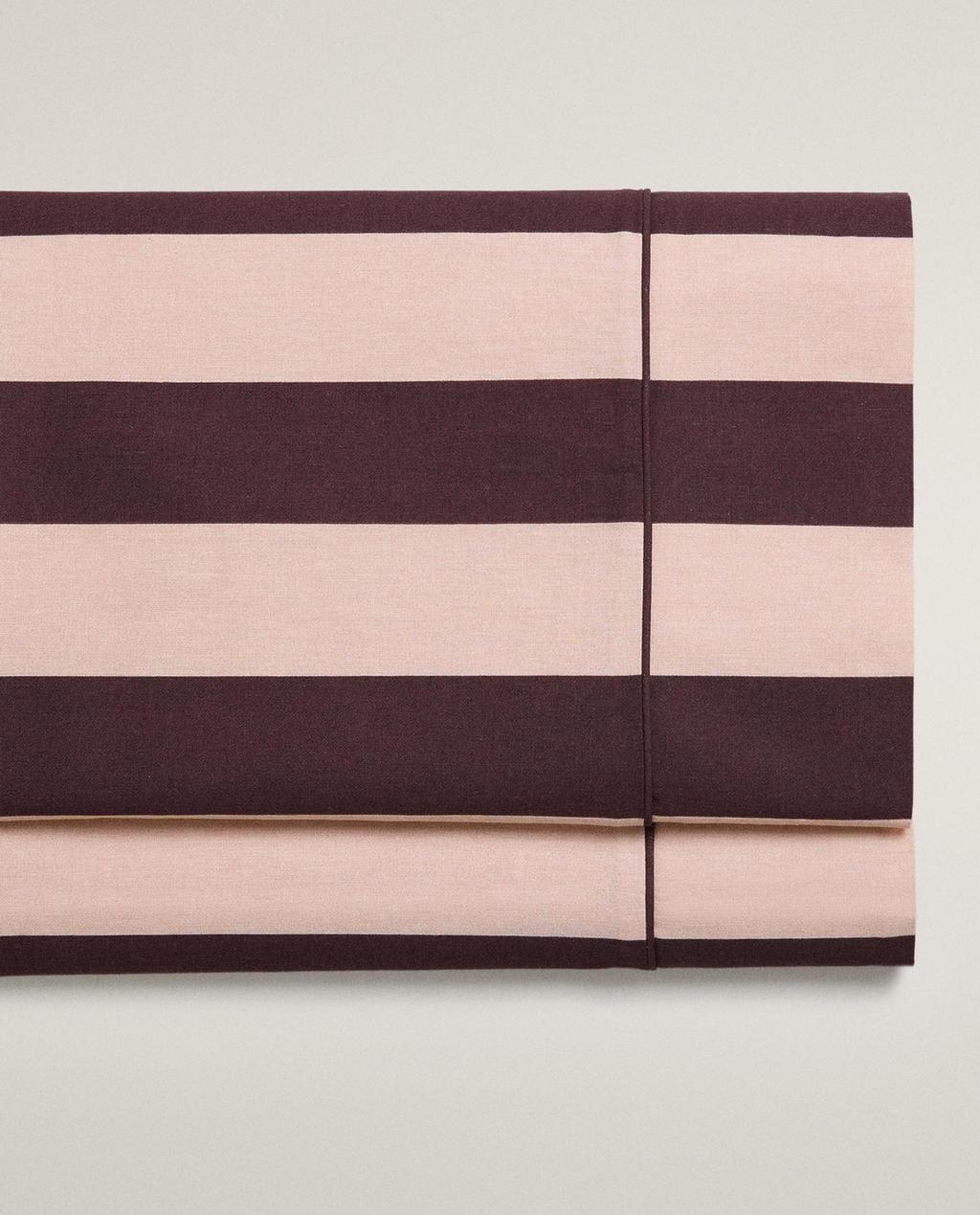
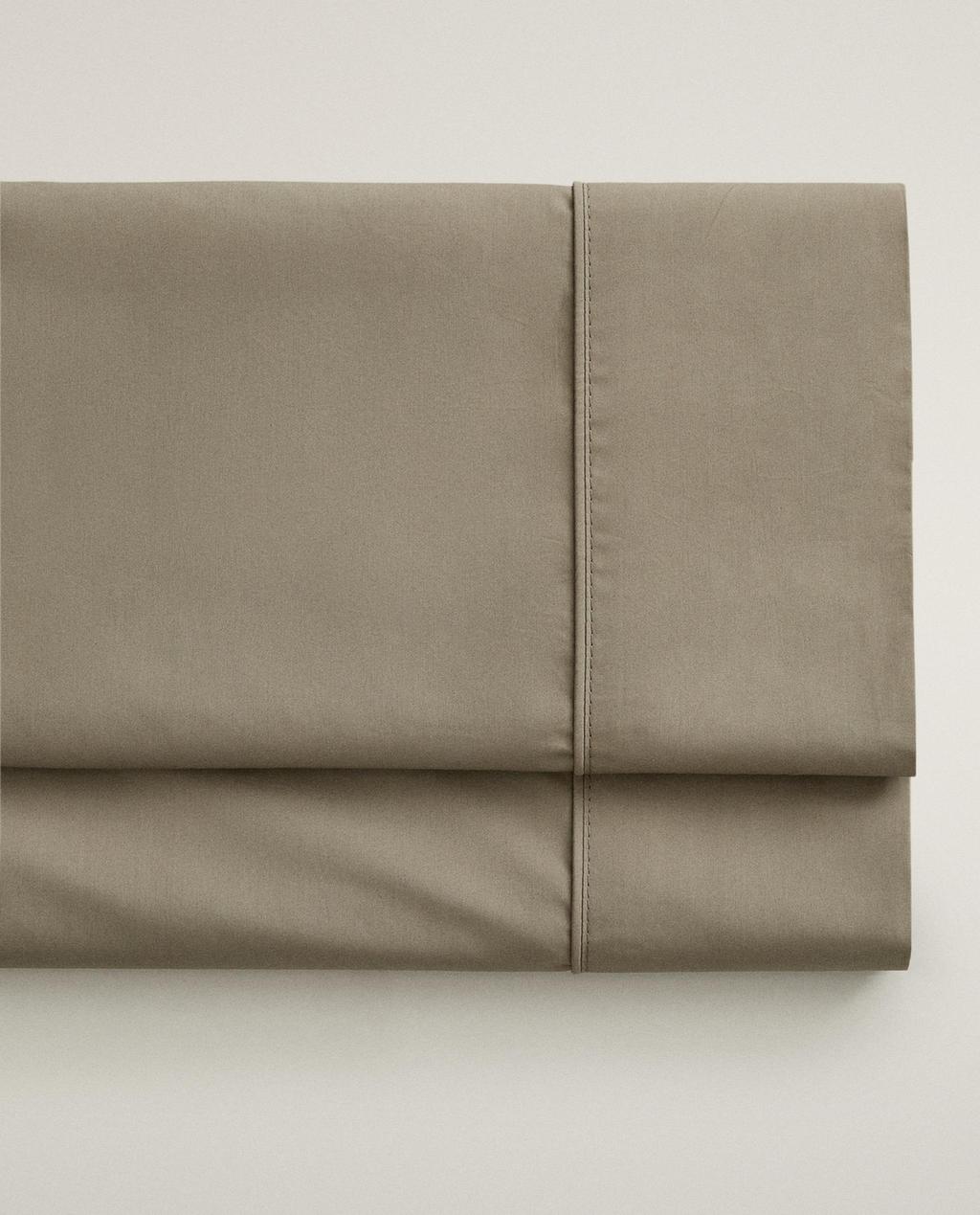
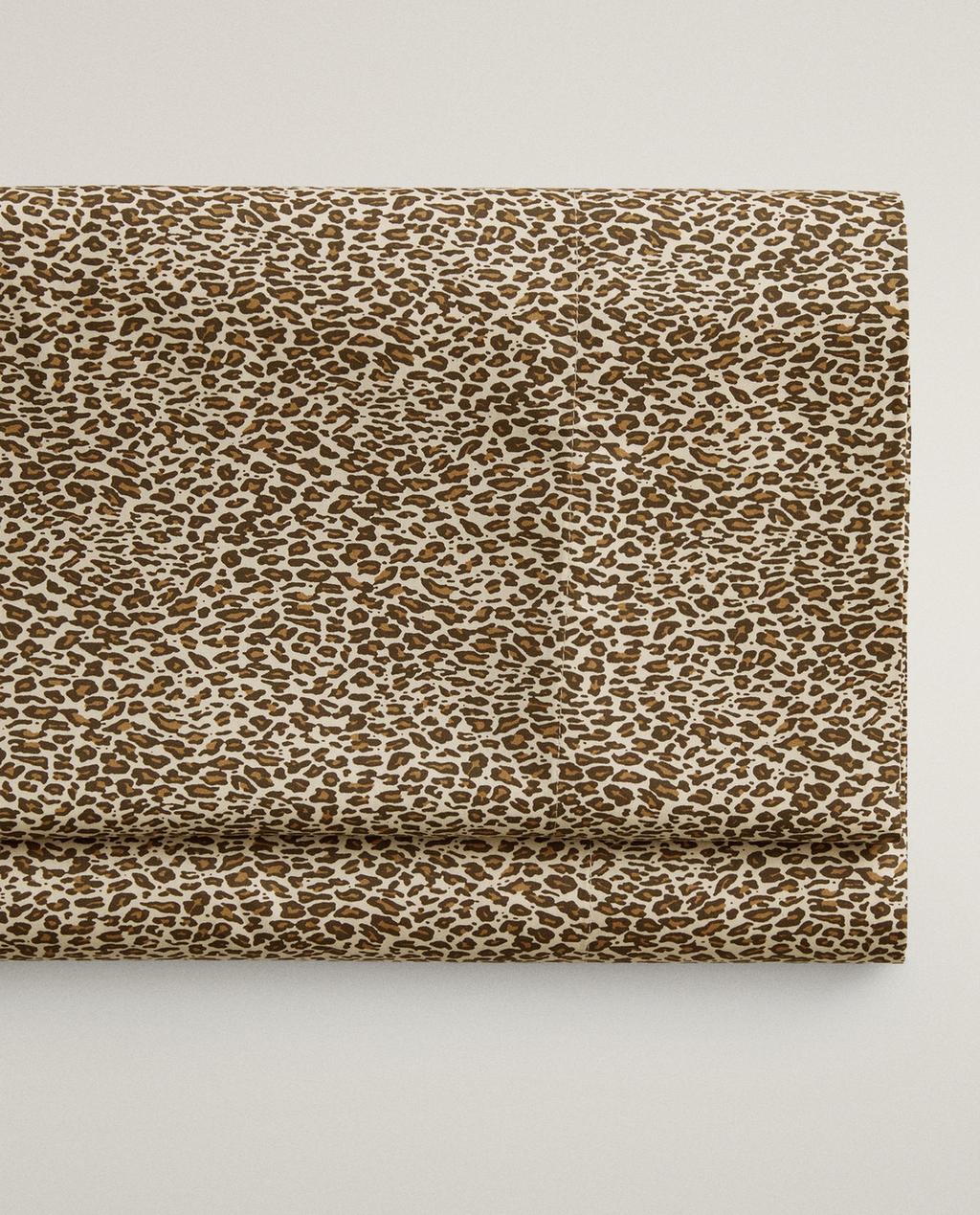
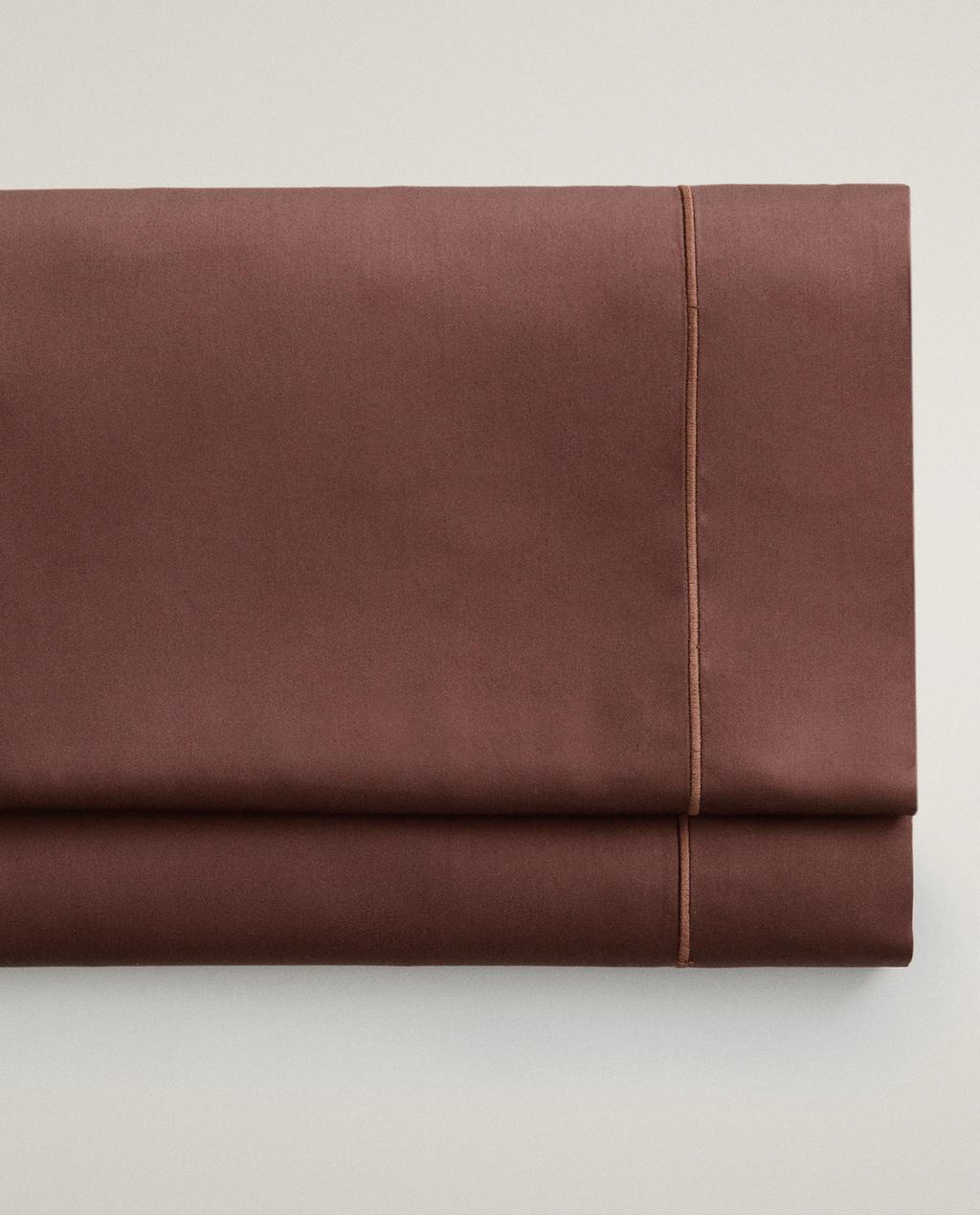
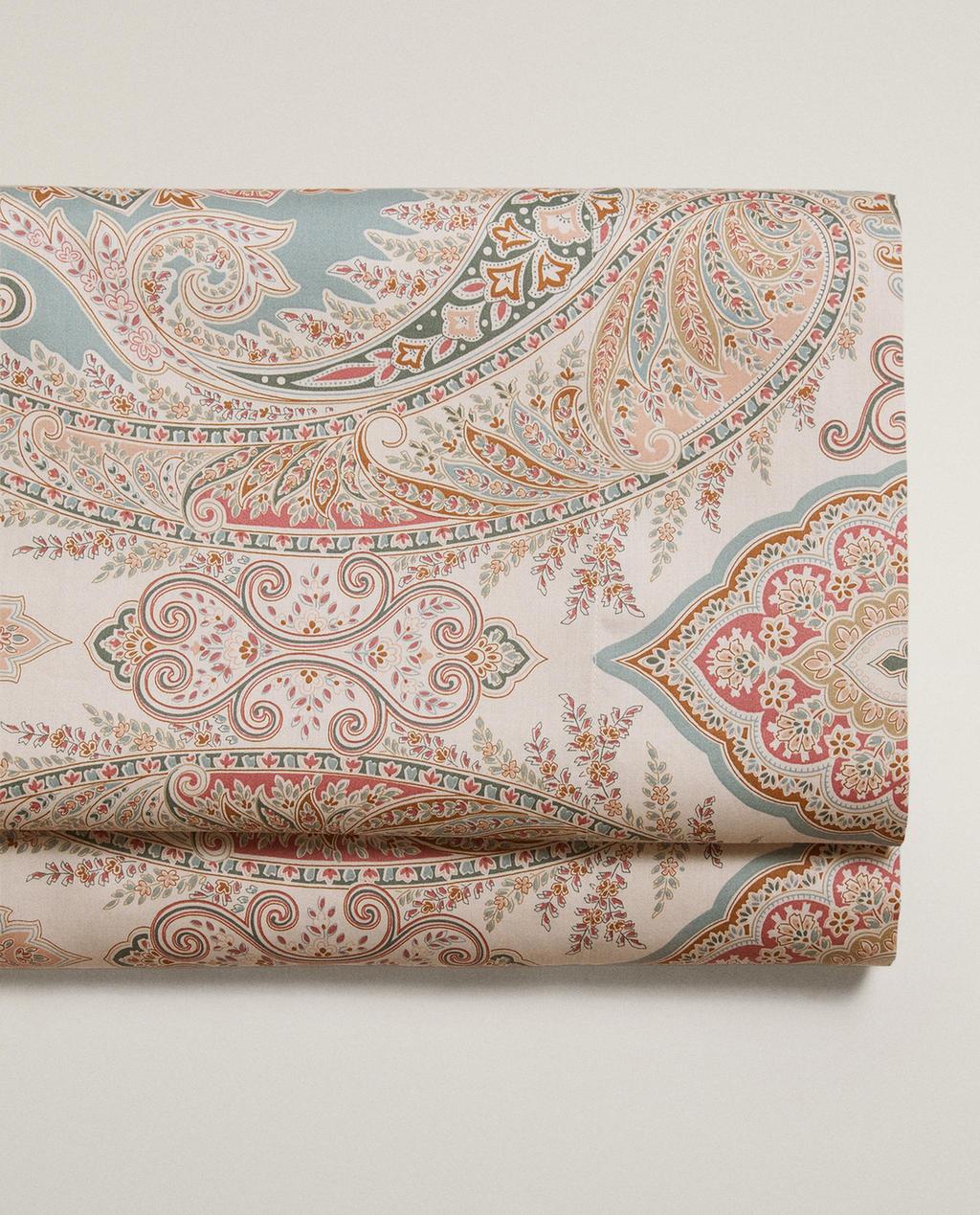
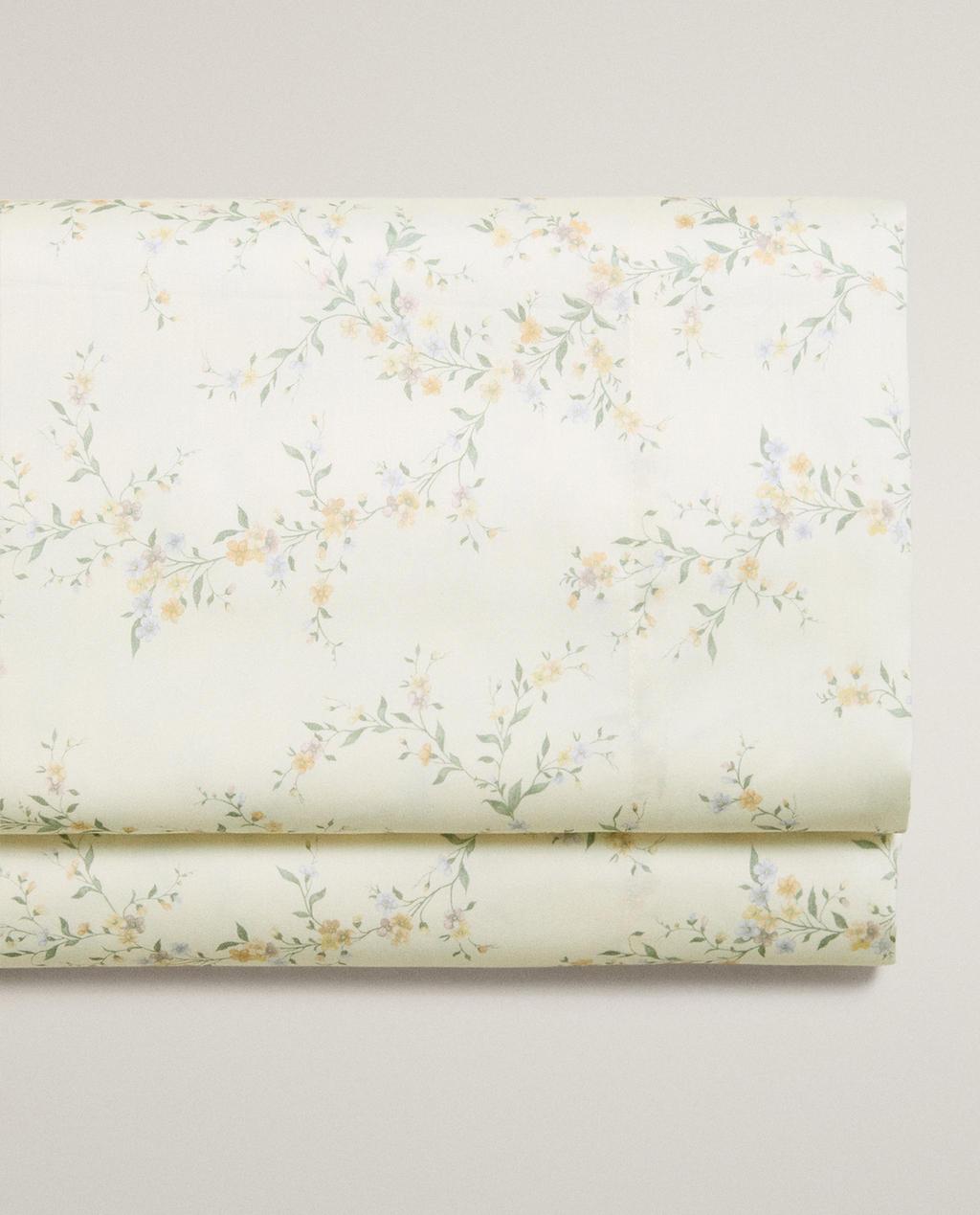
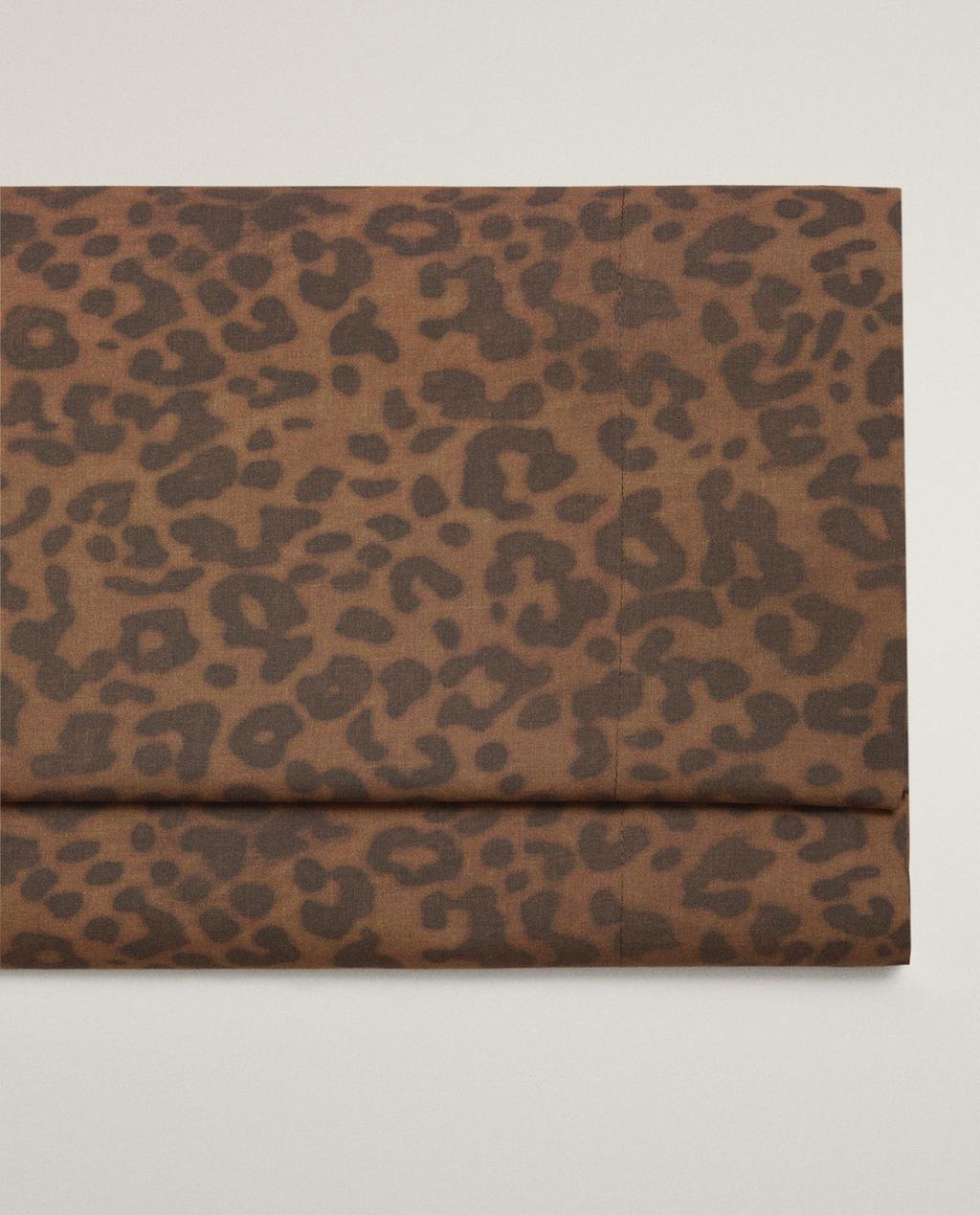
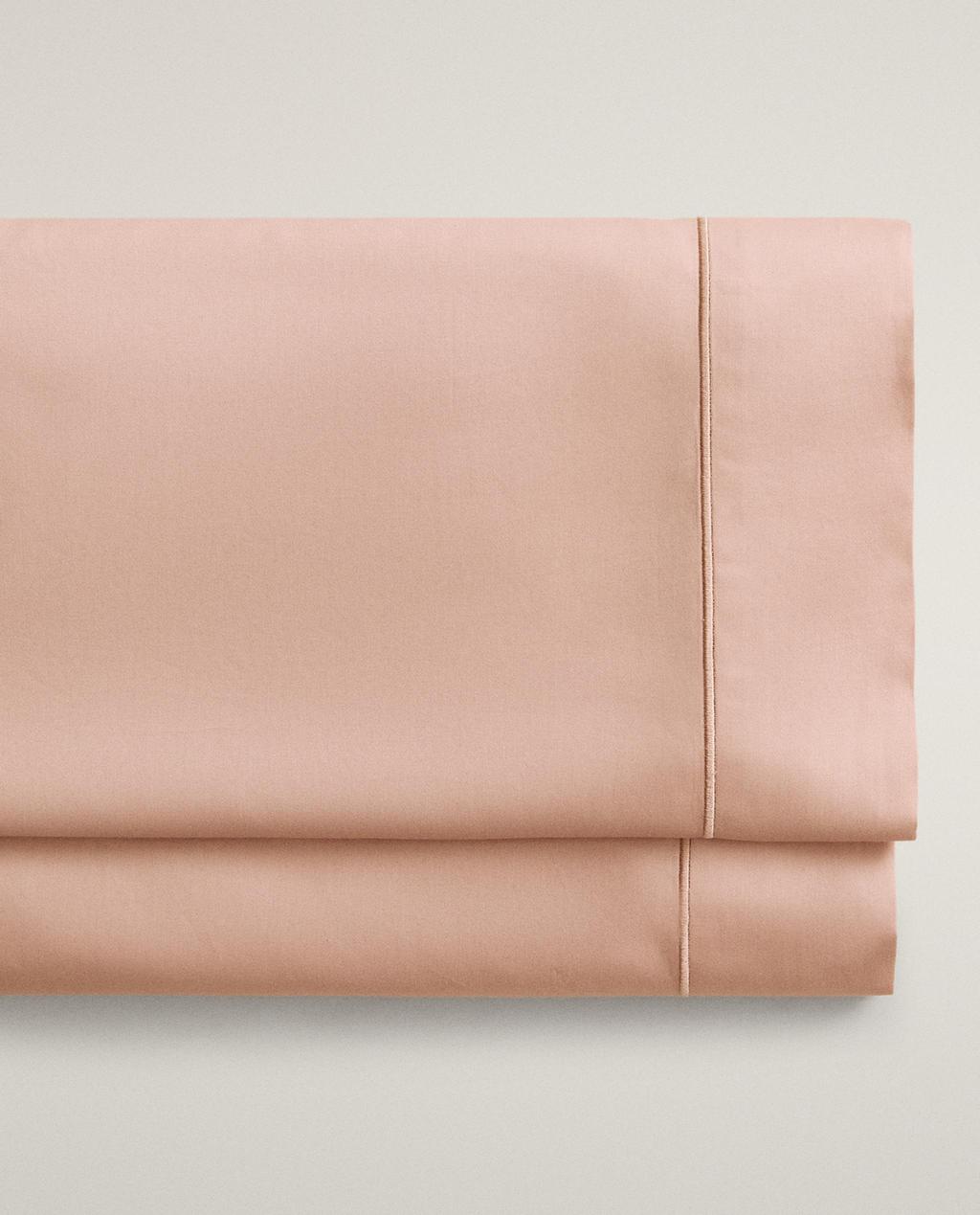
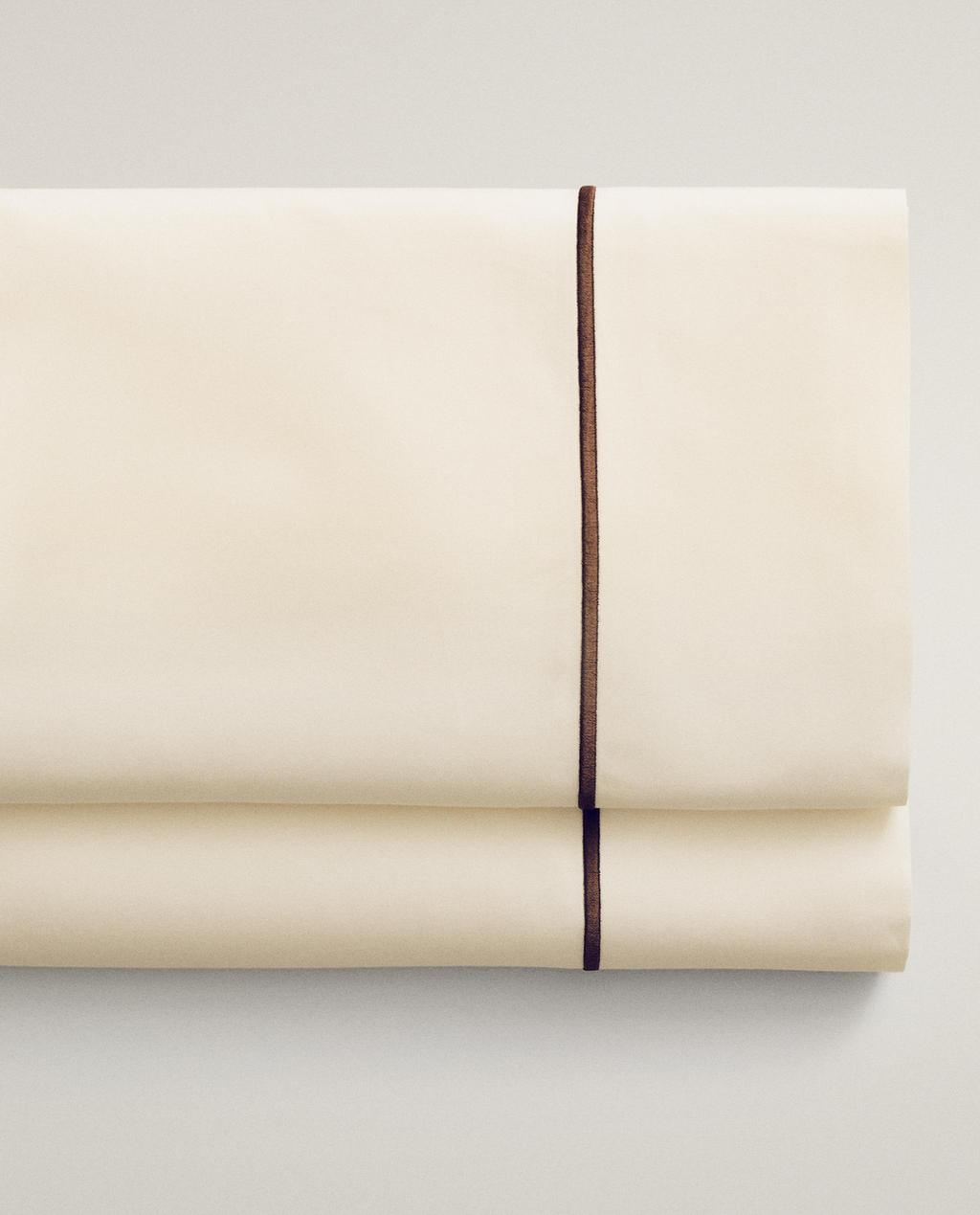
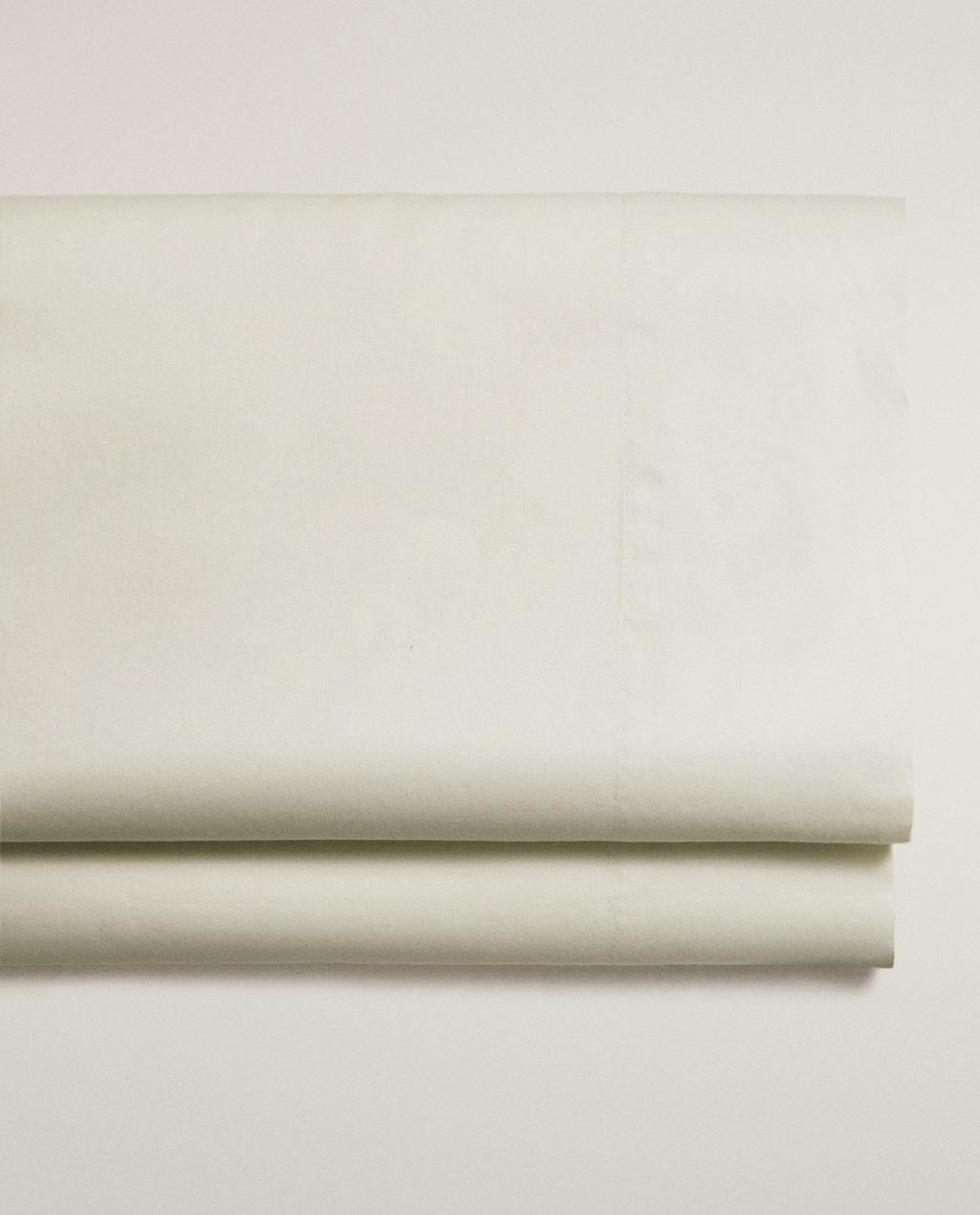
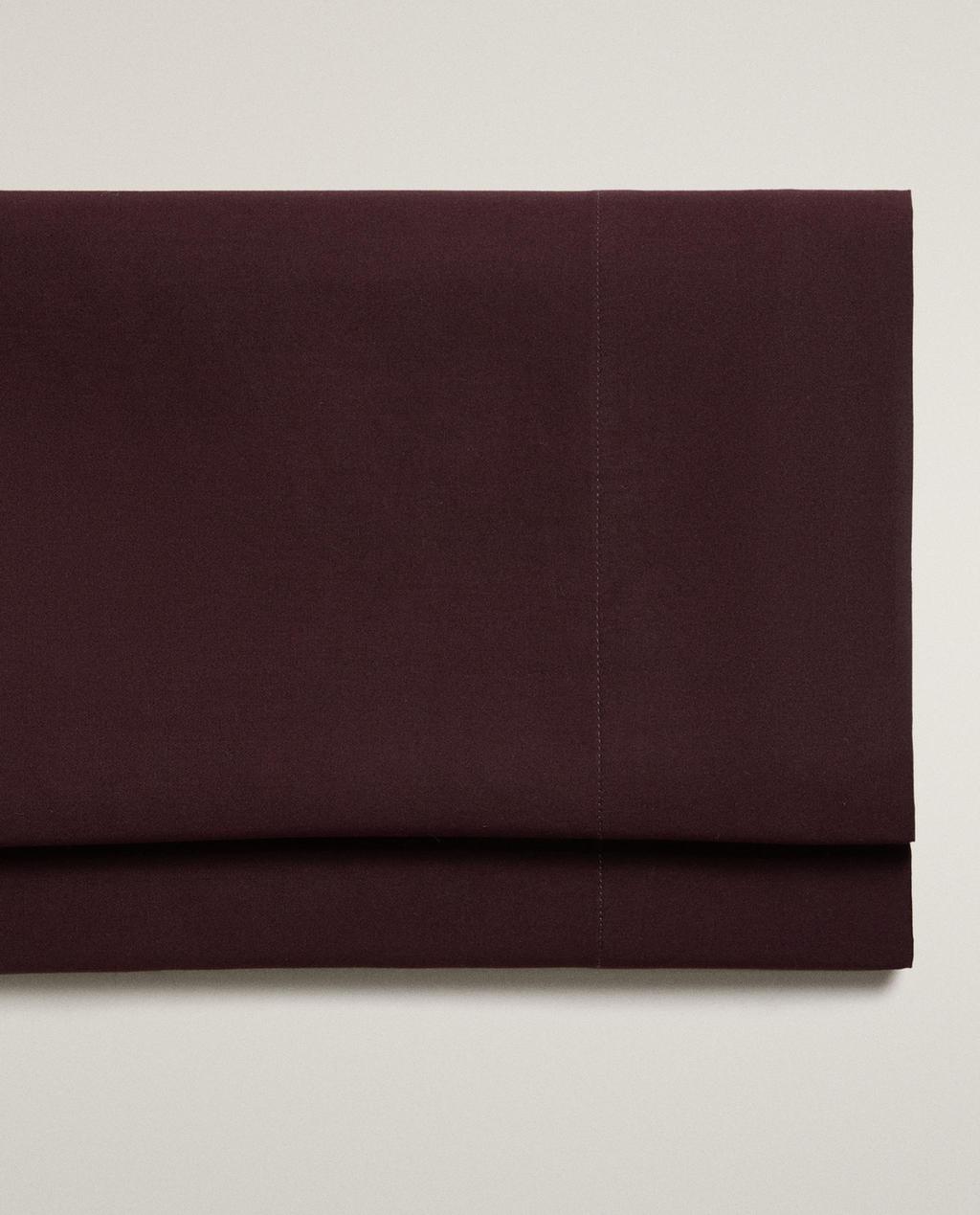
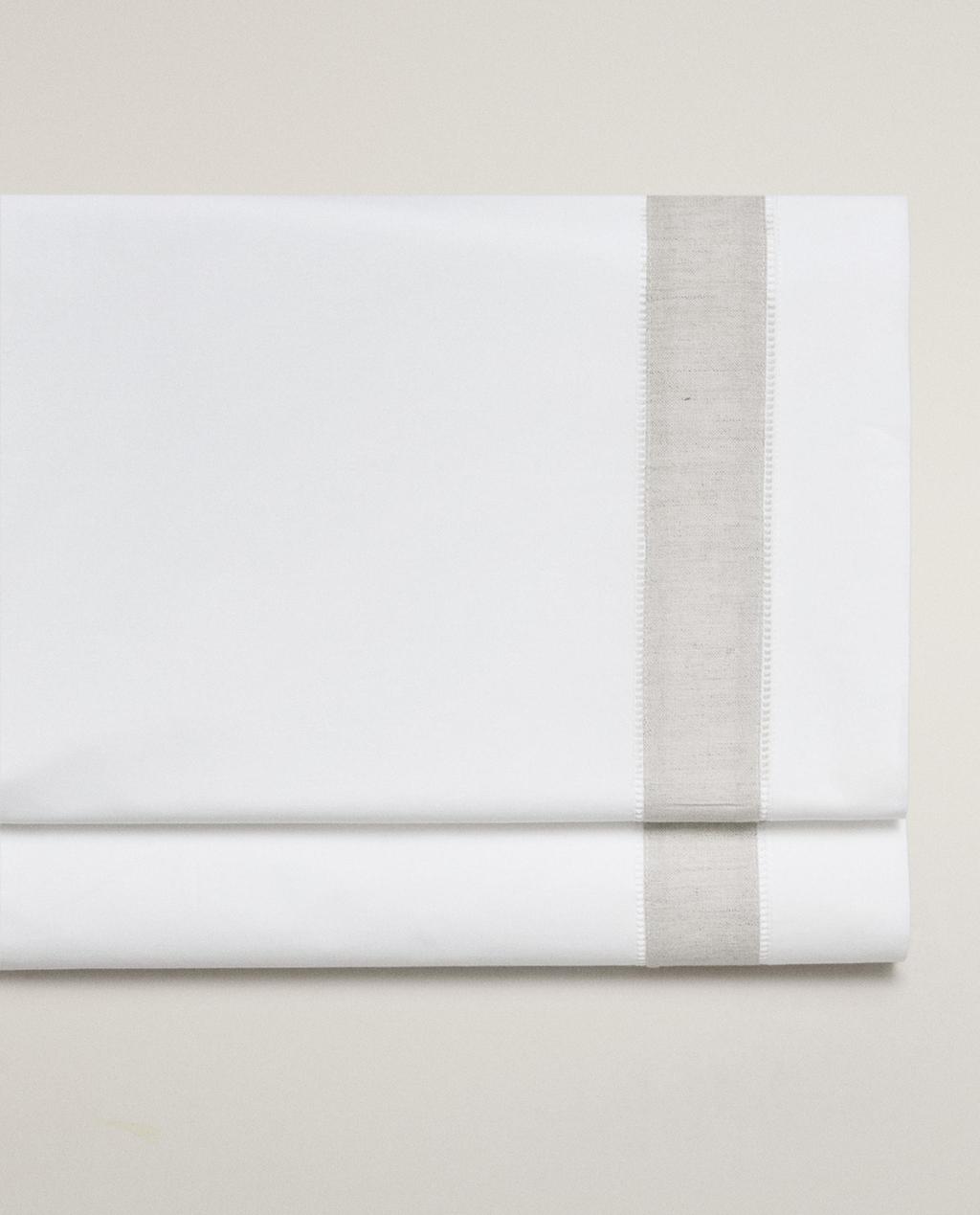
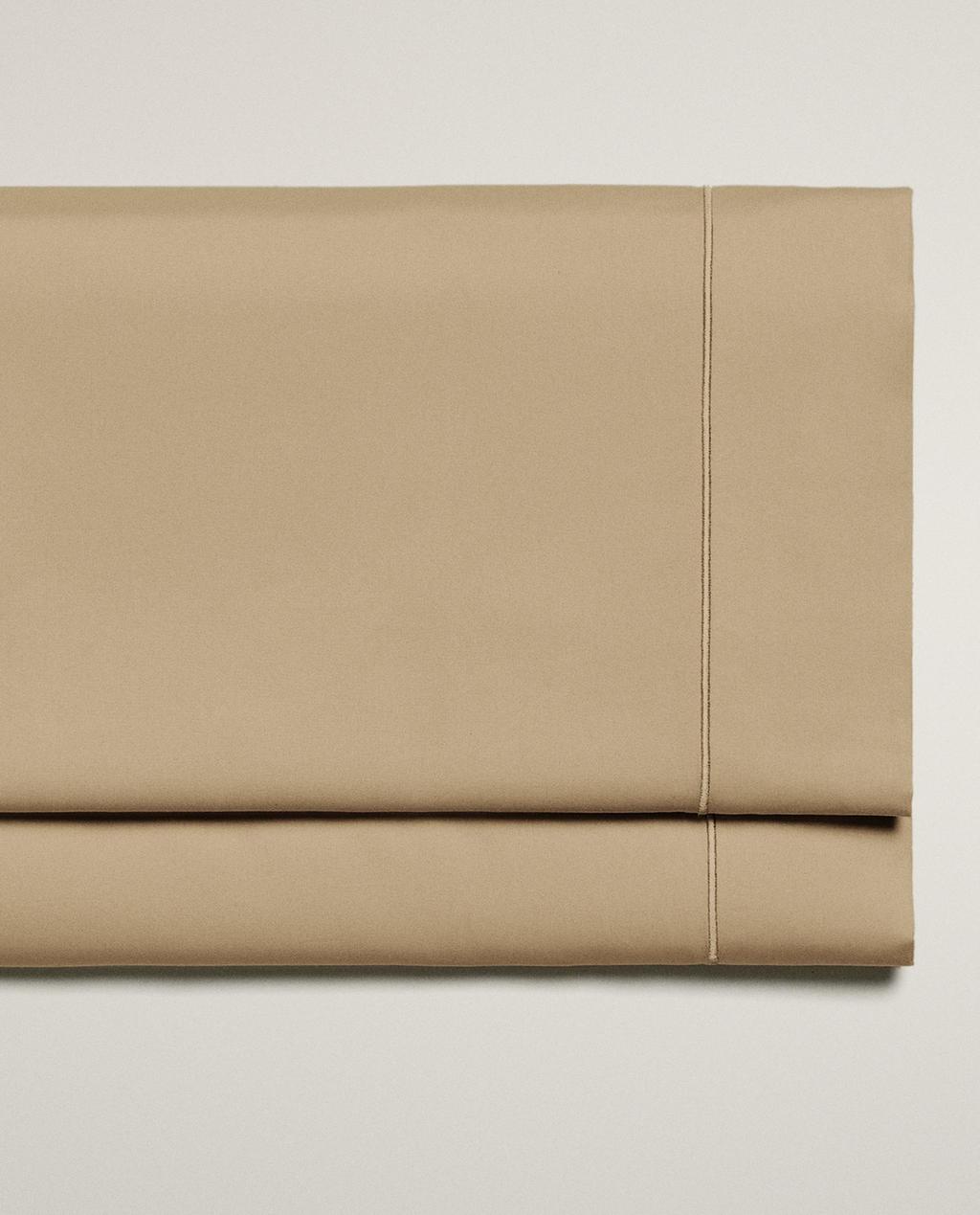
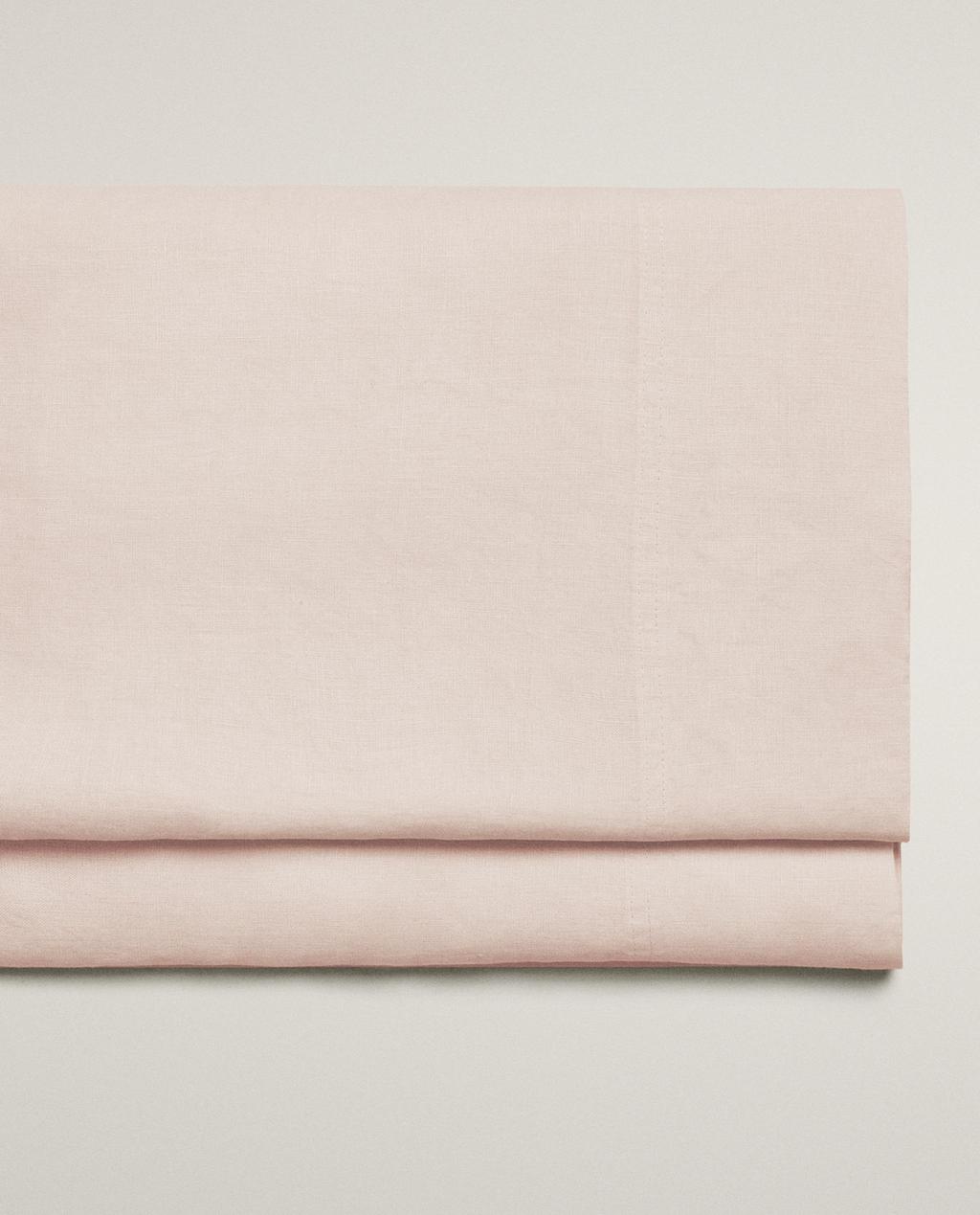
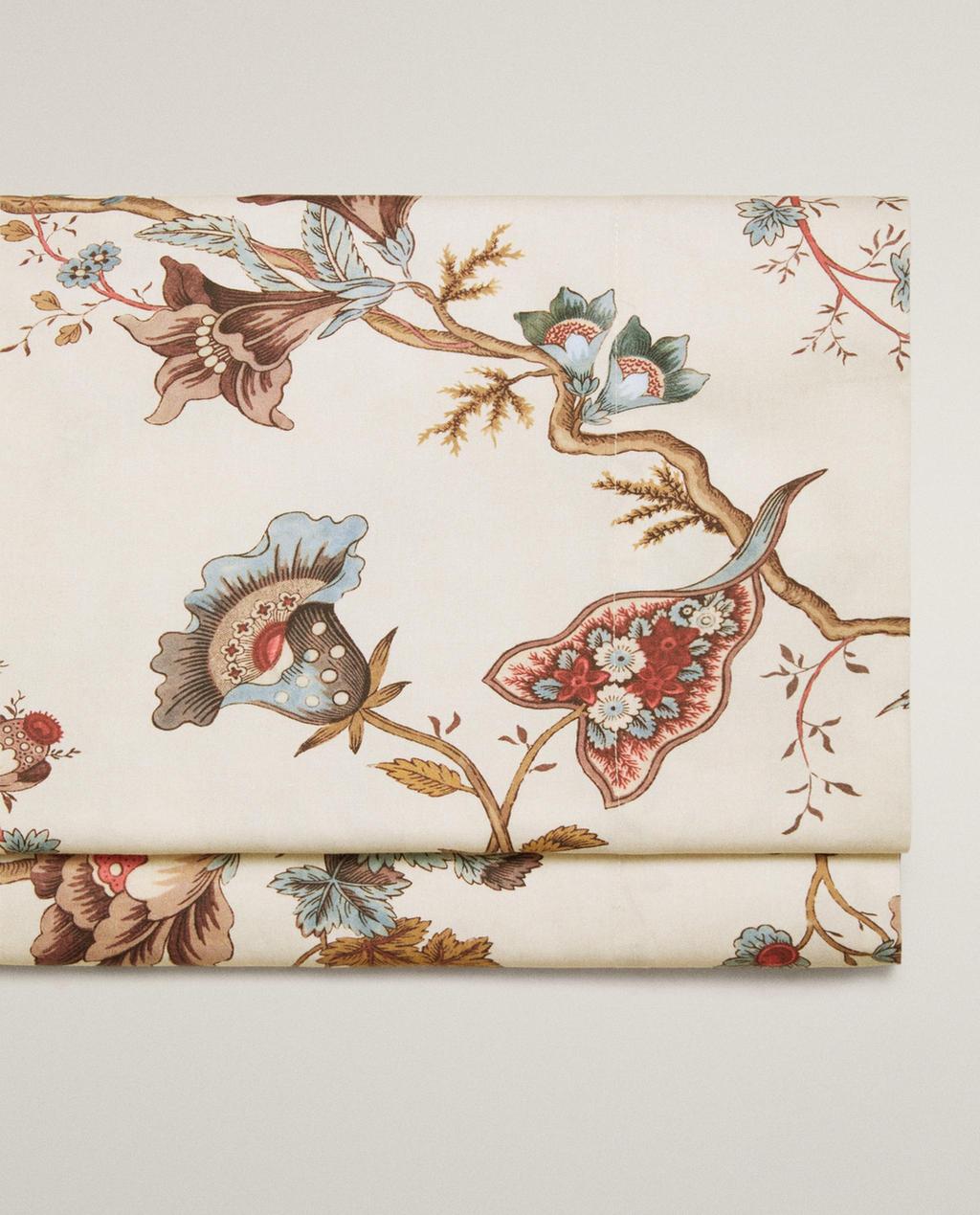
Flat sheets for versatile layering
Flat sheets from Zara Home offer more flexibility than a shaped bottom sheet: use them above the sleeper, as a lightweight summer layer or, if preferred, directly over the mattress. Their generous cut makes them easy to fold and layer, while fitted sheets provide the more tailored alternative within the wider bedding collection.
Top sheets in cotton and linen
What is the point of a flat sheet?
A flat sheet adds a washable layer between the sleeper and the duvet, blanket or bedspread. It can make the bed feel fresher, provide a light covering in warmer weather and reduce direct contact with heavier upper layers. Some people also like the more traditional look created by folding the top edge back over the duvet. Flat sheets are optional rather than essential, but their versatility is precisely why they remain useful even when a fitted sheet is used underneath.
Do you sleep under or over a flat sheet?
When it is used as a top sheet, you sleep underneath it, with the duvet or blanket above. Traditionally, flat sheets were also used beneath the sleeper as a bottom layer over the mattress. Both approaches are valid. Fitted sheets have largely taken over the bottom-sheet role for many people because they are quicker to fit and stay in place more easily. A flat sheet is therefore often chosen for its flexibility rather than because there is only one correct way to use it.
Do I need a flat sheet if I have a duvet cover?
No, but some sleepers prefer one. A flat sheet can provide an extra washable barrier between you and the duvet cover, and it can be useful when the weather is too warm for a heavier layer. It also gives you another way to adjust warmth during the night without changing the whole bed. Whether you use one is largely a matter of habit and comfort. Flat sheets complement other bedding rather than replacing the need for a correctly sized duvet cover or mattress sheet.
Can a flat sheet be used as a bottom sheet?
Yes. A flat sheet can be placed directly over the mattress and tucked underneath, which is the traditional method of making a bed. The main difference is that it has no elasticated corners, so it requires more folding and tucking to keep it smooth. A fitted sheet is usually faster to put on, while the flat version offers more versatility because it can work above or below the sleeper. The choice between the two depends on how you like to make the bed rather than on one being universally better.
See more